


Refinishing brings hardwood floors back to life — but sanding and applying a new finish can only do so much. If there’s underlying damage that hasn’t been addressed, the refinishing process will cover it temporarily at best. At worst, it will make the damage more visible.
Hardwood floor repair before refinishing Kansas City homeowners schedule is one of the most important steps in the entire process — and one that’s often overlooked when homeowners try to skip straight to the finish coats.
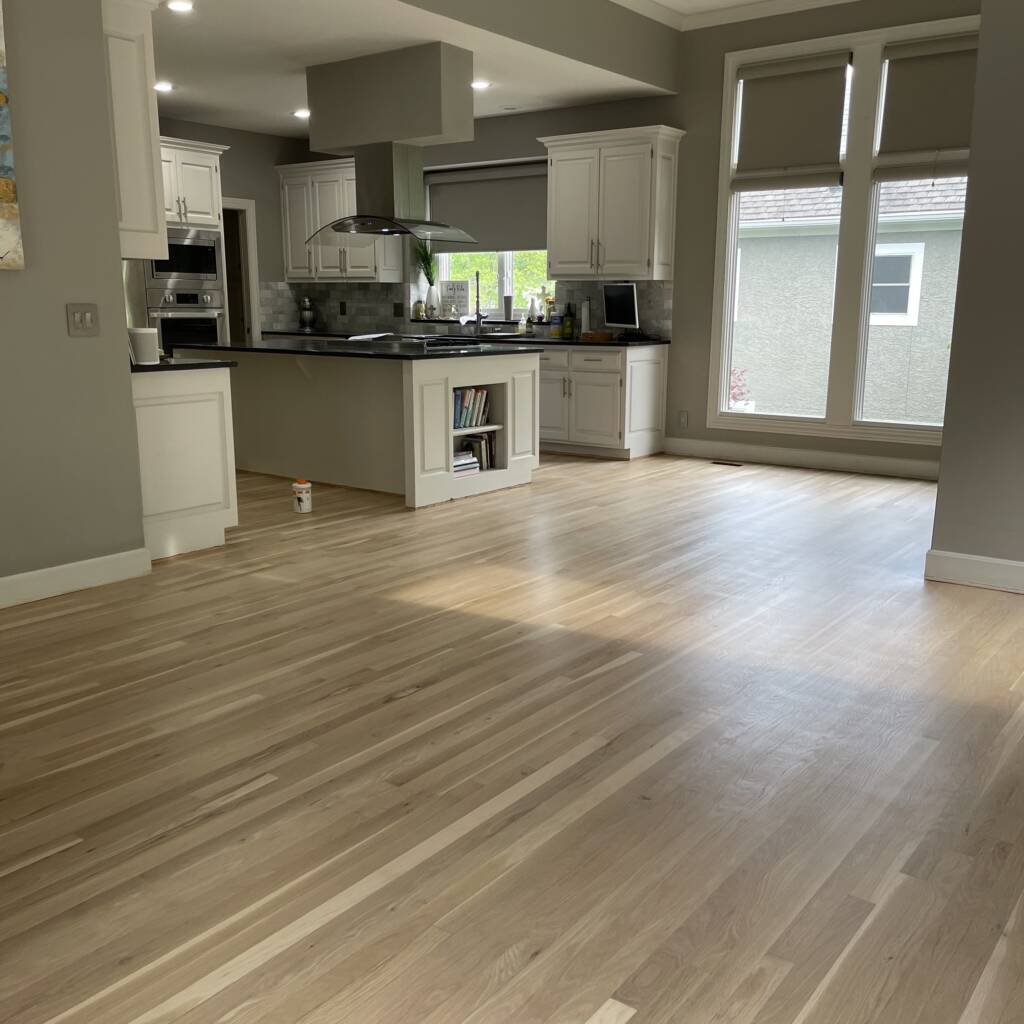
Taking the time to complete hardwood floor repair before refinishing Kansas City professionals recommend ensures the final result is smooth, durable, and built to last.
Here’s what damage needs to be repaired before refinishing begins, and what to expect during the assessment process.
Why Hardwood Floor Repair Before Refinishing Matters
Completing hardwood floor repair before refinishing Kansas City homeowners schedule is the difference between a result that lasts years and one that fails within months.
Sanding is not a cure-all. It removes the surface finish and a thin layer of wood — but it can’t fix structural problems, fill deep voids, or level boards that have shifted or warped. Attempting to refinish over unaddressed damage leads to uneven results, finish failures, and in some cases, more expensive repairs later.
Completing necessary repairs before sanding ensures the floor is structurally sound and level — giving the sanding and finishing process the best possible foundation to work from.
6 Types of Damage That Should Be Fixed Before Refinishing
1. Cracked or Split Boards
Boards that have cracked lengthwise or split at the ends need to be replaced before refinishing begins. Sanding over a cracked board won’t close the crack — it will remain visible under the new finish and may worsen over time as the wood continues to move seasonally.
Individual board replacement is straightforward in most cases. A flooring professional will source matching wood, replace the damaged boards, and blend them into the surrounding floor before sanding begins.
2. Cupped or Buckled Boards
Cupping — where the edges of a board are higher than the center — and buckling — where boards have lifted off the subfloor — are caused by moisture. Before these boards can be sanded flat, the moisture source must be identified and addressed. Sanding cupped boards without fixing the moisture problem will result in the boards cupping again after refinishing.
In mild cases, allowing the floor to dry out fully will flatten the boards enough to sand. In severe cases, board replacement may be necessary.
3. Deep Gouges and Holes
Surface scratches sand away easily. Deep gouges — from furniture legs, dropped objects, or pet damage — that extend below the surface layer of the wood need to be filled before sanding. Wood filler matched to the species and color of your floor is used to fill these voids, allowed to cure, then sanded flush with the surrounding surface.
4. Squeaky or Loose Boards
Squeaking is caused by boards rubbing against each other or against the subfloor as they flex underfoot. Refinishing won’t fix squeaks — they need to be addressed before sanding begins by securing loose boards with fasteners or addressing subfloor issues directly.
5. Gaps Between Boards
Some seasonal gapping between boards is normal and doesn’t require repair. Wide, permanent gaps — caused by significant wood shrinkage, improper installation, or moisture damage — should be filled with flexible wood filler before refinishing. Rigid filler in large gaps will crack as the wood expands and contracts seasonally.
6. Damaged Subfloor
If the subfloor beneath the hardwood has been damaged by water, rot, or structural issues, it must be repaired before refinishing begins. A compromised subfloor causes movement in the boards above it — leading to squeaking, cracking, and finish failures that no amount of refinishing will solve.
What a Professional Assessment Catches That Homeowners Miss
Many of the issues above aren’t immediately visible to the untrained eye. Mild cupping may not be obvious until a straight edge is placed across the floor. Early subfloor damage can be detected by feel — soft spots, flex, or movement underfoot — before it becomes a visible problem.
During a professional in-home assessment, a flooring specialist will check for all of these issues systematically, give you an honest picture of what repairs are needed, and factor those repairs into the project quote.
According to the National Wood Flooring Association, a thorough pre-refinishing assessment is essential to achieving a durable, high-quality result — and skipping this step is one of the most common causes of refinishing failures.
At Premium Wood Floors KC, every refinishing project starts with a free in-home assessment that includes a full inspection for damage. → Get a Free Estimate
How Repairs Are Integrated Into the Refinishing Project
In most cases, hardwood floor repair before refinishing Kansas City professionals complete is done on the same visit as the refinishing project — not as a separate appointment. Repairs are completed first, the floor is allowed to settle, and then sanding and finishing proceed as normal.
This integrated approach means minimal disruption for homeowners and a seamless result — repaired boards blend into the surrounding floor after sanding and finishing, with no visible difference in color or texture.
For more extensive repairs, a separate repair visit may be scheduled before the full refinishing project begins.
How Much Do Repairs Add to the Refinishing Cost?
The cost of hardwood floor repair before refinishing Kansas City homeowners pay depends entirely on the type and extent of damage found during the assessment.
Minor repairs — filling a few gouges, securing loose boards, filling small gaps — typically add a modest amount to the overall project cost. More significant repairs — replacing multiple boards, addressing subfloor damage, fixing moisture-related cupping — add more.
The key is identifying what’s needed before the project begins so there are no surprises on the final invoice. A detailed, written quote that separates repair costs from refinishing costs is the standard at reputable Kansas City flooring companies.
→ See Our Hardwood Floor Refinishing Services
Ready to Find Out What Your Floors Need?
The best way to determine what hardwood floor repair before refinishing Kansas City your home needs is to have a professional assess the floors in person.
The first step is a free in-home assessment. Our team at Premium Wood Floors KC will inspect your floors, identify any damage that needs to be addressed before refinishing, and give you a clear, itemized quote for the full project.
We serve homeowners throughout Overland Park, Lenexa, Olathe, Leawood, and Prairie Village.
→ Request Your Free Estimate Today
Premium Wood Floors KC serves the greater Kansas City metro area, including Overland Park, Lenexa, Olathe, Leawood, and Prairie Village. Specializing in hardwood floor installation and refinishing.
