


If you’re planning a hardwood floor refinishing project, one of the first questions you’ll encounter is whether to use dustless or traditional sanding. The difference between the two isn’t just about dust — it affects the quality of the final result, the cleanliness of your home during the project, and the long-term performance of your finish.
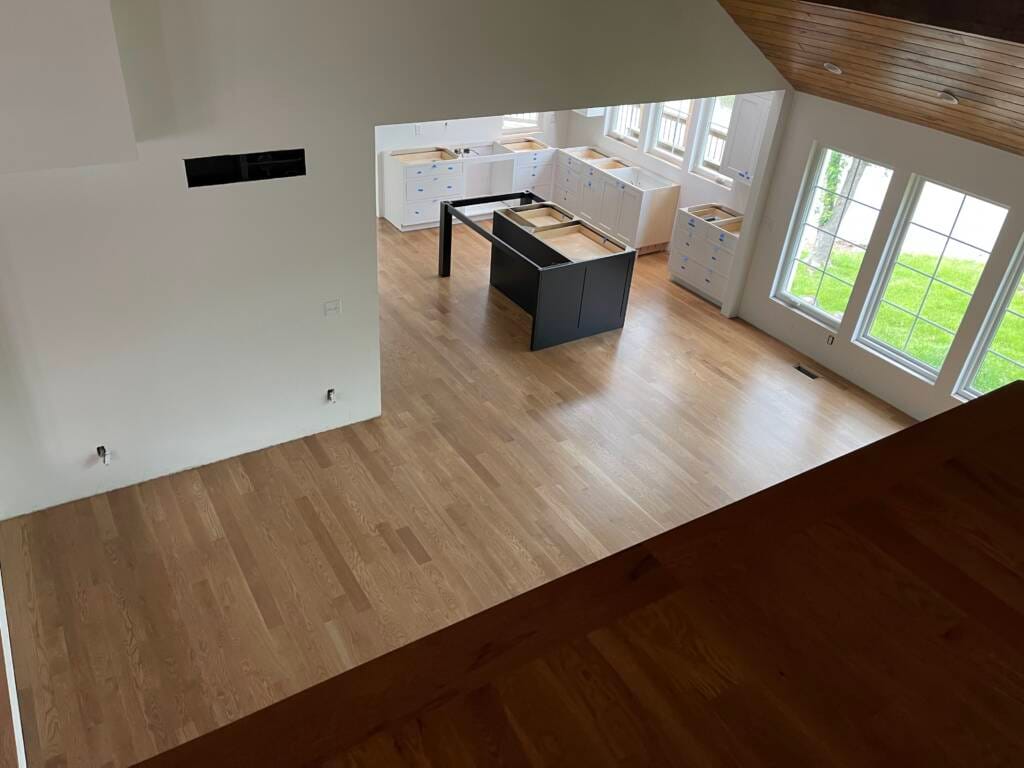
The debate around dustless vs traditional floor sanding Kansas City homeowners face has a clear winner in most situations — but understanding why helps you ask the right questions when evaluating flooring companies.
What Is Dustless Floor Sanding?
Dustless sanding uses commercial-grade sanding equipment connected directly to powerful vacuum systems that capture wood dust at the source — before it becomes airborne. As the sander moves across the floor, the vacuum draws particles away continuously, containing up to 99% of the dust that traditional sanding releases into the home.
The result: a dramatically cleaner work environment, better air quality, and a superior surface for finish application.
What Is Traditional Floor Sanding?
Traditional sanding uses drum or belt sanders without integrated vacuum systems. The equipment is effective at removing old finish and surface damage — but the dust it generates goes directly into the air and settles throughout the home.
In a traditional sanding project, fine wood dust finds its way into HVAC systems, settles on furniture in adjacent rooms, and takes days to fully clean up. It’s the reason many homeowners remember floor refinishing as a chaotic, messy experience.
Dustless vs Traditional Floor Sanding Kansas City: Head-to-Head Comparison
| Dustless Sanding | Traditional Sanding | |
|---|---|---|
| Dust containment | Up to 99% captured | Spreads throughout home |
| Air quality during project | Significantly better | Fine particles airborne for hours |
| HVAC impact | Negligible | Clogs filters, contaminates ducts |
| Cleanup required | Minimal | Extensive — days of cleaning |
| Surface quality for finish | Superior | Residual dust affects adhesion |
| Family/pet disruption | Significantly reduced | High — family should vacate |
| Finish durability | Better — cleaner bond | Can be compromised by dust |
| Professional standard | Yes | Being phased out by reputable companies |
Why Dustless Sanding Produces Better Results
The comparison of dustless vs traditional floor sanding Kansas City professionals use isn’t just about cleanliness — it directly affects the quality of the finished floor.
When residual dust remains on the surface after traditional sanding, it gets trapped under the finish coats. This causes:
- Bumps and texture in the finished surface
- Adhesion failures where the finish doesn’t bond properly to the wood
- Uneven sheen across the floor
- Premature wear as the finish breaks down faster in areas where adhesion was compromised
Dustless sanding eliminates this variable entirely. The clean, particle-free surface it produces allows finish coats to bond more effectively — resulting in a smoother, more durable finish that lasts longer.
The Health and Home Argument
Fine wood dust is classified as a respiratory irritant. Traditional sanding fills your home with particles that linger in the air for hours after sanding is complete — a real concern for households with children, elderly residents, or anyone with respiratory conditions.
Dustless sanding removes most of this exposure. Families can remain closer to home during the project, and the air quality impact is dramatically reduced compared to traditional methods.
Beyond respiratory concerns, traditional sanding dust contaminates HVAC systems — clogging filters and potentially spreading particles through ductwork to every room in the home. Dustless sanding prevents this entirely, protecting your HVAC investment and avoiding the additional cost of duct cleaning after the project.
Is Dustless Sanding More Expensive?
In most cases, no. Reputable professional refinishing companies in Kansas City include dustless sanding equipment as standard — it’s not an upgrade or a premium add-on. The overall refinishing cost ($3 to $8 per square foot) is the same whether dustless or traditional equipment is used.
Companies that quote significantly below the market rate are sometimes using traditional sanding equipment to reduce overhead costs. If a quote seems unusually low, it’s worth asking specifically whether dustless equipment will be used.
According to the National Wood Flooring Association, dustless sanding systems are now the professional standard for residential refinishing — and homeowners should expect this as a baseline, not a premium feature.
When Would Traditional Sanding Still Be Used?
Honestly — rarely, in a professional context. There are some edge cases where traditional equipment is used for specific detail work or in spaces where dustless equipment can’t maneuver effectively. But for the main sanding passes on any residential hardwood floor, dustless equipment is the professional standard throughout the Kansas City metro area.
If a company proposes traditional sanding for your project without a clear explanation, it’s worth asking why.
The Bottom Line on Dustless vs Traditional Floor Sanding Kansas City
The question of dustless vs traditional floor sanding Kansas City homeowners raise most often has a straightforward answer — and the data consistently points in one direction.
When homeowners in Kansas City compare dustless vs traditional floor sanding, the conclusion is consistent: dustless sanding is cleaner, produces better results, protects your home, and is included as standard by reputable flooring companies — at no additional cost.
At Premium Wood Floors KC, every refinishing project uses commercial-grade dustless sanding equipment as standard. We serve homeowners throughout Overland Park, Lenexa, Olathe, Leawood, and Prairie Village.
→ See Our Hardwood Floor Refinishing Services
→ Request Your Free Estimate Today
Premium Wood Floors KC serves the greater Kansas City metro area, including Overland Park, Lenexa, Olathe, Leawood, and Prairie Village. Specializing in hardwood floor installation and refinishing.
